Howard Gardner’s Theory of Multiple Intelligences offers a powerful framework for understanding the full spectrum of human potential. Intelligence is not a single scale; it is a mosaic. Each learner carries a distinct blend of:
- Linguistic Intelligence
- Logical Intelligence
- Visual Intelligence
- Musical Intelligence
- Bodily Intelligence
- Interpersonal Intelligence
- Intrapersonal Intelligence
- Naturalistic Intelligence
- Existential Intelligence
These intelligences evolve not through algorithms, but through lived experience, culture, reflection, mentorship, emotion, and meaning-making.
Interestingly, when we place Generative AI and human intelligence side by side, we notice striking parallels.
AI improves when exposed to diverse datasets. Human intelligence expands when exposed to diverse experiences. A child who engages in music, nature, movement, storytelling, mathematics, collaboration, and reflection develops a wider palette of intelligences.
Just as AI adapts through model updates, human beings adapt by evolving their intelligences across life stages. Bodily intelligence may begin in playful movement and mature into athletic discipline. Interpersonal intelligence may grow from childhood friendships into leadership. Intrapersonal and existential intelligences deepen through reflection, resilience, and the search for purpose.
Our greatest breakthroughs have come from synthesizing intelligences across domains. The Golden Age of Islam stands as a powerful example:
- Al-Khwarizmi’s Algebra
- Ibn Sina’s Canon of Medicine
- Al-Biruni’s Astronomy
- Jabir ibn Hayyan’s Early Chemistry
Alongside remarkable achievements in art, architecture, and language, these contributions demonstrate how integrated intelligences transformed civilization.
At Springfields, this intellectual heritage comes alive through our “Contribution to Muslim Civilization” exhibit held every five years, where students investigate and present Muslim contributions through interdisciplinary, research-driven work.
Both AI and humans learn through feedback. Both develop non-linearly. Both depend on context.
Yet there is a defining difference.
AI can simulate creativity, but it does not feel.
It can process information, but it does not care. It does not experience empathy, conscience, wonder, love, or moral responsibility.
That is the domain of human intelligence.
AI Can Excel At | Only Humans Can Bring
| AI Can Excel At |
Only Humans Can Bring |
| Compute, predict, automate |
Empathy & compassion |
| Sort data & patterns |
Cultural and moral judgment |
| Generate text & images |
Meaning-making & purpose |
| Optimize efficiency |
Creativity from lived emotion |
| Scale knowledge |
Wisdom, ethics, conscience |
This understanding shapes the Whole Person Approach at Springfields.
Education, in our view, must go beyond academic excellence. It must cultivate competence and character. It must nurture the mind, heart, body, and spirit.
In an AI-enabled world, empathy, adaptability, collaboration, creativity, ethical clarity, and self-awareness are not optional attributes. They are essential intelligences.
As technology accelerates, our task is not to compete with machines but to deepen our humanity.
We thoughtfully embrace AI as a tool—one that enhances efficiency and expands access to knowledge—but we remain anchored in the belief that technology must serve human development, not replace it.
If AI represents the future of machines, Multiple Intelligences represent the future of humanity.
Our responsibility as educators is to ensure that as artificial intelligence advances, human intelligence evolves even more profoundly.
At Springfields, we are committed to cultivating learners who do not merely perform, but who:
- Think critically
- Feel deeply
- Act ethically
- Collaborate meaningfully
- Live purposefully
In doing so, we prepare them not just for a technological future, but for a fully human one.
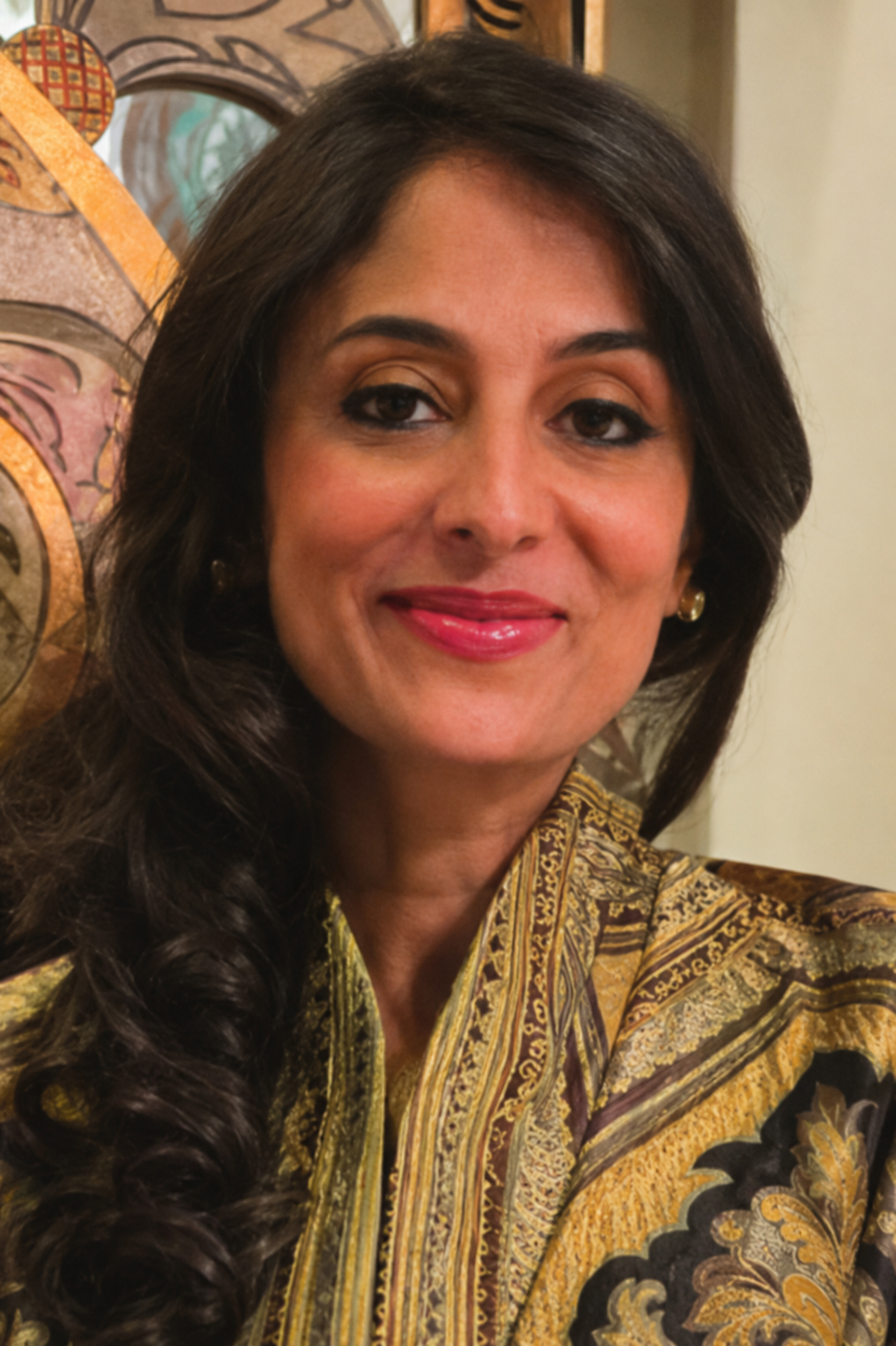
Dr. Anjum Babukhan
Pedagogy Advisor